

Counter-terrorism laws should be reviewed, and the Racial Discrimination Act should be updated to protect religious groups , according to a long-awaited report from the special envoy to combat Islamophobia.
The report makes 54 recommendations to parliament and government departments to tackle Islamophobia, improve data collection on hate crimes, and calls on the government to “confront Islamophobia with equivalent urgency to other discriminatory practices, and provide it with the same rights, protections, and legal recourse”.
Muslim groups have welcomed the report and its recommendations, including the Australian National Imams Council who called on the government to act on the findings, “rather than allow the wheels to keep spinning, as successive governments have done, without any change.”
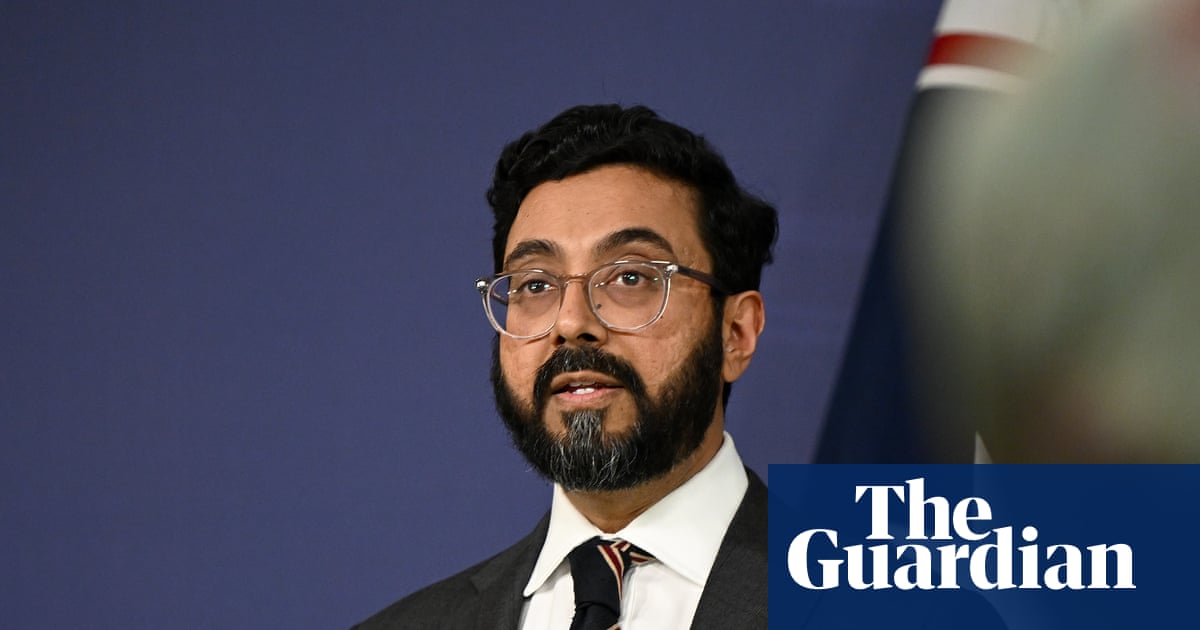
Special envoy Aftab Malik stood alongside Anthony Albanese, and the minister for multicultural affairs, Anne Aly, at a press conference in Sydney, after handing down the report. Members of his family were also in the room as he addressed the media.
The special envoy said the release of the report was a critical and long-awaited moment for Muslim communities, and a historic opportunity to combat Islamophobia.
“Islamophobia in Australia has been persistent, at times ignored and other times denied, but never fully addressed,” Malik said.
“The issue is not a lack of evidence, but a lack of action.”
Sign up: AU Breaking News email
Malik pointed to a recent incident where a fake bomb was left outside a Gold Coast mosque, and said these were the “consequences of leaving Islamophobia unaddressed”.
“Since 7 October 2023, Islamophobic incidents have skyrocketed … Muslim women in particular face the rap. Many are physically assaulted, spat [on] or shoved or subjected to threats simply for wearing a headscarf.”
The report is Malik’s first major piece of work, after he was appointed to the role in September 2024. The report said a review of counter-terrorism laws should investigate whether policies and practices have any “potential discriminatory application and effect”.
It also recommends the government establish a commission of inquiry into Islamophobia and set up codes of conduct for all MPs about what constitutes Islamophobia, as well as mandatory training for all MPs and staff.
The report also calls on the government to implement key parts of the Human Rights Commission’s anti-racism framework, provided nine months ago, including to amend the Racial Discrimination Act to include a positive duty on employers to eliminate racism.
Bilal Rauf, senior advisor at the ANIC and barrister, told Guardian Australia the report has “very wide support” amongst the Muslim community.
“Islamophobia is one of those things that tends to languish and while it attracts a lot of discussion, it doesn’t get the same response.”
The report also recommended including groups including Muslims and Hindus in the Racial Discrimination Act.
Rauf said this would dispense the need for a standalone religious discrimination act, which both the Albanese and Morrison governments failed to pass.
“If you are a group of people who come from particular part of the world, bound by ethnicity and also religion, so Jewish people [and] Sikhs, for example, are caught [by the Act], but there have been decisions to say that others, such as Muslims, Hindus, are not covered because there isn’t any particular ethno aspect to it,” Rauf said.
Malik told ABC on Friday, there were no protections against religious discrimination for Muslims under the Racial Discrimination Act.
“What we’re asking is the clarification on whether ethnic religious groups such as Hindu, Buddhist and Muslims are included in that definition.”
The report was made public and given to journalists after the press conference began.
after newsletter promotion
Albanese said the government will consider the recommendations.
“The targeting of Australians based on their religious beliefs is not only an attack on them, but it’s an attack on our core values,” Albanese said.
“We must stamp out the hate, fear and prejudice that drives Islamophobia and division in our society.”
Aly, the first Muslim woman to be sworn into the federal cabinet, said the special envoy’s report had given a voice to Muslims who had “long endured discrimination, racism, and, at times, some pretty abhorrent acts of just outright hatred”.
The special envoy for antisemitism, Jillian Segal, released her report to the government in July. It called for more sweeping measures, including threatening to cut funding from universities and artists if they fail to act against antisemitism.
Segal also proposed her office should monitor media coverage and bolster education in schools and workplaces, as part of a suite of recommendations the government is still considering.
More than one-third of Australians say they have negative attitudes towards Muslims, according to a July 2024 survey by the not-for-profit Scanlon Foundation.
Islamophobia Register Australia has seen a 530% increase in incidents reported to the body since 7 October 2023.
On the special envoy’s recommendation to improve the tracking of hate crimes, Sarara Attai, co-executive director of the Register, said the government will need to work with the Muslim community to do that.
“There is a deep level of distrust within the [Muslim] community, and I think that any government led, hate crime initiative is… bound to fail because what will happen is that people within the Muslim community will not feel safe reporting to a government led register,” she said.
“Those databases will skew the reality of what’s actually going on.”
The Australian Muslim Advocacy Network wrote in a statement that the recommendations would make “significant gains in equality”, but the group remains critical of the special envoy’s role.
“While we do not share the current government’s rationale for establishing these envoy roles… we acknowledge and support the observations and recommendations outlined in this report.”
