

Unlock the Editor’s Digest for free
Roula Khalaf, Editor of the FT, selects her favourite stories in this weekly newsletter.
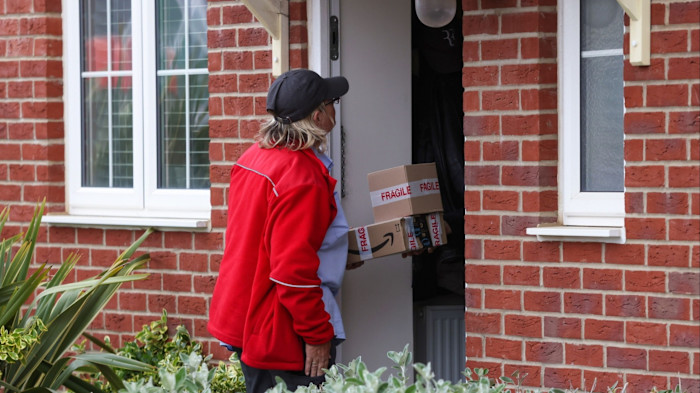
Every online shopper has tales of lost parcels, misleading delivery updates or the dreaded photo of a precious purchase outside some stranger’s house. But far fewer had the choice in the first place of who delivered their latest bargain. Is this not an opportunity for a canny retailer?
UK parcel volumes last year surpassed the peak they reached during the pandemic, according to regulator Ofcom. The domestic market grew at a rate of roughly 6 per cent last year. Despite this, though, delivery companies’ revenue from shipping parcels rose just 0.9 per cent.
It’s perhaps not surprising, then, that service hasn’t kept up. More than two-thirds of consumers have had a recent parcel problem, according to Ofcom, while a third of those polled by Citizens Advice had an issue with their latest delivery. Less than half of those customers who do complain about a shipment, Ofcom notes, are satisfied with the outcome.
Door-to-door delivery is a complex business that requires serious scale to be profitable, so competition is liable to be limited. Still, the growth of ecommerce is luring private equity interest, which offers hope. Apollo Global Management bought Evri, formerly Hermes, in 2024. Advent International, meanwhile, may make a bid for Amsterdam-listed InPost, according to Sky News. InPost also owns UK home delivery service Yodel.
There’s room for improvement: the Ofcom and CA surveys both ranked Yodel and Evri bottom. Yet incentives are a problem too. Many network-like businesses involve a lasting relationship — think electricity or broadband. But ecommerce usually entails one-off interactions. Service considerations are muddied by the fact that it’s the retailer, not the customer, who has the main relationship with the delivery company.
More power to the consumer might help. Many retailers already make a virtue of speedier, or free, delivery. But not many let the customer select which company ships their goods. Three-quarters of those polled by Citizens Advice said they had no choice of parcel company.
That suggests they are missing a trick — or at least, may be failing to spot a reason why customers go cold. Besides, after a weak Christmas, UK retailers need all the help they can get. Giving customers more say over who handles their precious cargo, where such a choice is possible, might deliver an improvement to a flawed market and a fillip to ecommerce, too.
jennifer.hughes@ft.com
.
