

Good morning and welcome back. In today’s newsletter:
-
G7 finance ministers hold an emergency meeting
-
German chancellor’s party suffers defeat in key election
-
China’s fight to wipe out poverty
-
Ending the grim march of the touch screen
We begin today by looking at the impact of the Iran war on oil prices and the global economy.
Emergency G7 meeting: Finance ministers from the world’s richest nations will meet later today to discuss a response to soaring oil prices. The surge in energy costs since the US-led attack on Iran pushed the price of a barrel of Brent crude, the international benchmark, above $100 earlier today for the first time since Russia’s full-scale invasion of Ukraine in 2022.
G7 ministers will be joined by Fatih Birol, International Energy Agency executive director, at 8.30am New York time, according to people familiar with the situation. They will discuss a possible release of petroleum from reserves to tackle the surge in oil prices. Three G7 countries, including the US, have so far expressed support for the idea, according to the people familiar with the talks.
Why it matters: The 32 members of the IEA hold strategic reserves as part of a collective emergency system designed for oil price crises. The emergency petroleum stockpiles were set up as part of the creation of the IEA in 1974 following the Arab oil embargo and have only been used five times since the organisation’s creation.
The reserves currently number 1.2bn barrels of oil and, officials say, ministers will discuss releasing about a quarter of that in an effort to ease the upward pressure on prices. Brent crude has risen more than two-thirds since the start of the year and was up nearly 25 per cent at the start of trading today to $116.71 before giving up some of those gains. By late morning it was at $108 a barrel while shares in Europe fell sharply and US futures contracts are pointing to a lower open in US markets later today.
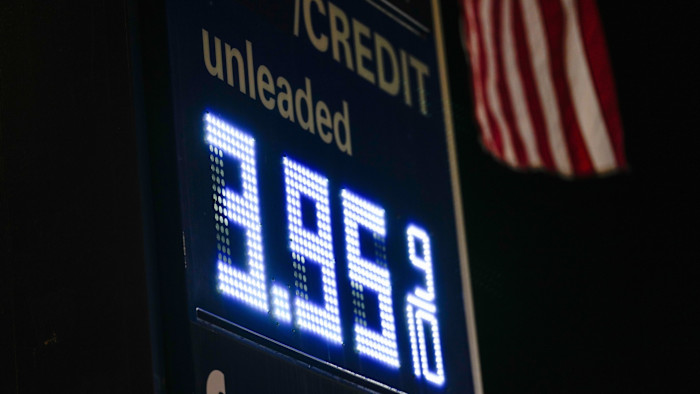
The surge in oil prices over the past week threatens an inflationary surge that could do lasting damage to economic growth across the world. In the US, average petrol prices rose to $3.45 a gallon yesterday, up from $2.98 a gallon a week ago, putting President Donald Trump under pressure to halt the rising prices. Read the latest on the conflict on our live blog.
Here are the latest developments as the war enters its second week:
-
Iran has named Mojtaba Khamenei, the son of the slain supreme leader, as his father’s successor in a move that signals the Islamic republic is likely to maintain its hardline policies towards the US, Israel and the west.
-
Donald Trump’s openness to deploying troops inside Iran, including special forces to seize Tehran’s enriched uranium, has raised new concerns in Washington about deeper US involvement in the war.
-
Where does this war stop? In this essay, historian Eugene Rogan looks at what “Operation Epic Fury” means for the Gulf and the wider region. “However this ends, the Middle East will never be the same,” he writes.
-
The impact will also be felt in supply chains, inflation and debt markets, writes Rana Foroohar. As complicated as geopolitics is today, geoeconomics is even more so, she says.
Here’s what else we’re keeping tabs on today:
-
Trade: Mexico’s economy minister Marcelo Ebrard presents a report on the consultations regarding the US-Mexico-Canada trade agreement.
-
Company results: Hewlett Packard Enterprise is expected to report a rise in first-quarter revenue.
Sign up to an exclusive subscriber webinar about the Middle East war. On Wednesday March 11 a panel consisting of FT columnists Kim Ghattas, Edward Luce, Katie Martin and Gideon Rachman will join chair Alec Russell, the FT’s foreign editor, to dissect the political, military and diplomatic calculations behind the conflict. Register here.
Five more top stories
1. German Chancellor Friedrich Merz’s Christian Democrats suffered a setback in key state elections in Baden-Württemberg, the industrial powerhouse of Germany and home to companies such as Porsche, Mercedes-Benz, Bosch and SAP. Merz had hoped to regain the 11mn-strong state a year after taking office and ahead of more challenging regional elections later this year.
2. A stash of documents allegedly belonging to the deceased boss of Mexico’s Jalisco New Generation Cartel suggests he paid thousands of dollars in bribes to police and other authorities. Read more about the “narco-ledger” of handwritten and printed papers found by Mexican newspaper El Universal.
3. China is “positive and open” on this month’s visit by Trump as it signalled its eagerness to make the first visit to Beijing by a US president in almost a decade successful. Wang Yi, China’s foreign minister, stressed the need for dialogue with the US even as he said the war in Iran “should not have happened”. Read more on the March 31 summit planning.
4. US private capital giant KKR is targeting a 10-fold return on a potential multibillion-dollar sale of a decades-old company that provides cooling equipment for data centres, as the AI boom boosts valuations. CoolIT Systems traces its origins back to 2001 when it produced liquid cooling systems for gaming computers before pivoting to support AI infrastructure.
Today’s big read
China has lifted more than 700mn people out of indigence, but some doubt President Xi Jinping’s claim that the mission is complete. Has China ended poverty? William Langley in Guizhou investigates.
We’re also reading . . .
-
Latin America: The stunning reversal of political fortune for the right has major implications for critical minerals.
-
US labour market: The current explosion in training results from the collision of two important trends, writes Oren Cass.
-
In a buzz: Tech groups such as drone maker Quantum are winning investor support in Europe, boosting the region’s venture capital industry, writes Patrick Jenkins.
-
Travel and geopolitics: Zubin Karkaria, chief executive of visa processor VFS Global, told the FT why he believes the geopolitical hit to global travel is only “temporary”.
Chart of the day

The US economy shed 92,000 jobs in February, the Bureau of Labor Statistics revealed on Friday. The sharp slide in the number of posts created eroded most of the gains of the previous month and fuelled concerns over the strength of the US labour market. Meanwhile, rising oil prices are leading traders to trim bets on the number of interest rate cuts the Federal Reserve will make this year.
Take a break from the news . . .
We might prefer the ease and speed of the self-service checkout, but Pilita Clark argues that it’s time to end the grim march of the touchscreen.

