

Unlock the Editor’s Digest for free
Roula Khalaf, Editor of the FT, selects her favourite stories in this weekly newsletter.
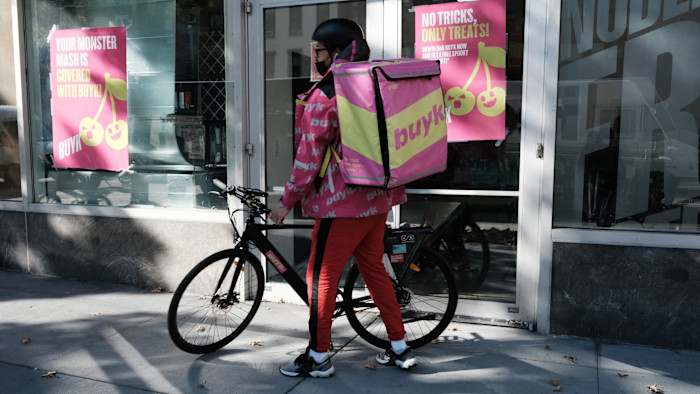
For a brief moment in 2021, those who would rather not get off the sofa seemed poised to inherit the earth. Ultrafast delivery start-ups with names such as Gopuff, Buyk and Jokr promised near-instant consumer gratification. A single tap summoned milk, snacks or paracetamol in 15 minutes or fewer.
The good times, however, proved shortlived. Much of the sector has collapsed over the past three years. Gorillas and Weezy were bought by Getir, which in turn retreated from the US and Europe to refocus on its home base of Turkey. Likewise, Jokr decamped back to Brazil. Buyk and Fridge No More disappeared entirely.
Superfast delivery of small-ticket items is an idea that has already been around the block. Back in 2001, Webvan and Kozmo.com found out the hard way that it is difficult to please both couch potatoes and investors at the same time. Then, as now, businesses were built on cheap venture capital money, but when that disappeared, so did their chances of success.
Hope remains, though, for some. Gopuff raised $250mn in November from investors, including Chelsea Football Club co-owner Todd Boehly. The deal valued the Philadelphia-based company at $8.5bn — almost half its 2021 peak. Gopuff is still standing, although that is partly down to lay-offs and pulling out of some markets, including Spain and France.
The fundamental problem is that superfast delivery sits at the centre of a Venn diagram featuring two businesses that are both, in their way, challenged. Groceries and delivery have razor-thin margins, low barriers to entry and fierce competition.
Supermarkets sport some of the lowest profitability in retail. Ebitda margins at Kroger and Albertsons, two publicly listed grocers, were about 5 per cent last year. Delivery service DoorDash, meanwhile, musters less than a 3 per cent margin and only turned a profit last year. Even Uber, whose global platform includes rides, food delivery and freight, manages just 8 per cent.
Throw in the added requirements of speed and high-rent urban locations and things get even stickier. So-called “dark stores” must be stocked and staffed; goods must be raced across town. Scale is of limited help: each new site simply adds fixed costs.
There might be one saving grace: America’s K-shaped economy. This is the idea that some households are on the way up, and others on the way down, with ever fewer in the middle.
And it is the ideal environment for a delivery service pandering to wealthy urbanites. At the top of the K, consumers may be more willing to pay a premium for convenience; at the bottom, more people may turn to side gigs to top up their income, providing delivery companies with more workers.
It is hardly a panacea for ultrafast delivery’s unforgiving economics — or a particularly encouraging indicator for the overall wellbeing of US consumers. But for unexpected reasons, a business model that has failed time and time again might finally have a chance.
pan.yuk@ft.com
