

You can enable subtitles (captions) in the video player
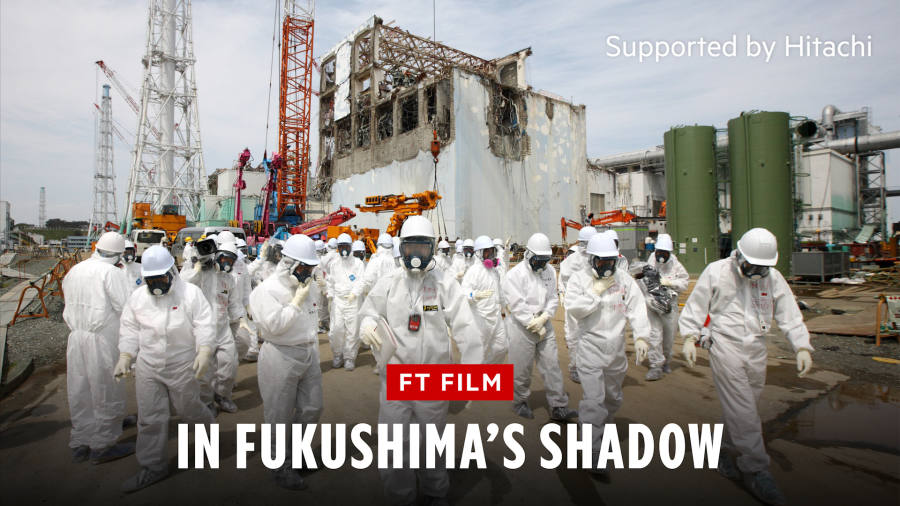
This is the aftermath of the third most powerful earthquake ever recorded, and huge tsunami that followed. The disaster ripped Japan’s economy apart. It caused a catastrophic meltdown of three nuclear reactors in Fukushima, which ranks as one of the world’s worst nuclear accidents in history. All in a country still suffering from the trauma of atomic bombs dropped at the end of the second world war.
Japan responded by disconnecting all of its nuclear power plants and was forced to rethink its power and its economy. But 15 years is a long time, and a lot has changed.
Turning back on the nuclear power stations makes economic and political sense, but the public fear of a disaster like Fukushima happening again means that it will be a delicate balance for Japan.
Around Fukushima, the scars of the tsunami and the nuclear disaster are everywhere. Leo Lewis, the FT’s Tokyo bureau chief, travelled to the area immediately after the disaster.
Almost 15 years ago, I, along with Japan and the rest of the world, were watching in horror as an explosion ripped through the building behind me. That’s unit 1 of the Fukushima Daiichi nuclear plant. And there were explosions in units 3 and 4 after that.
At the time, it was almost impossible to imagine what we’re doing today – standing here in normal clothes with the stricken reactor and the plant behind us. The reason I’m able to do that is because of the enormous effort of decommissioning that’s going on all around us, thousands of workers involved in the task of making this place safe for future generations.
Nuclear power in Fukushima has become a kind of a taboo thing to talk about in public. Rather than fear, general physical fear, over radiation, it’s more personal, emotional, of family being broken, of sadness that they had to endure.
Almost 20,000 people lost their lives, mostly by drowning. Many more lost their homes and livelihoods. The cost of rebuilding has been huge – an estimated $255bn. But the move to reject nuclear power completely has proved to be one of the most consequential decisions made in the aftermath of the disaster.
Before the accident, nuclear accounted for 30 per cent of Japan’s electricity, and the government had targeted getting as much as half from nuclear. After Fukushima, a third of Japan’s power got turned off.
Japan suffered a lot because we are importing all the fossil fuels from abroad. The nuclear was introduced to diversify our energy mix, and it was a core of the energy policy.
The hope was that renewable energy technologies like wind and solar could fill the gap, but they have been unable to provide the kind of reliable, round the clock power that nuclear does. And now business leaders and politicians are stepping up efforts to restart the dormant reactors.
We expect increasing electricity demand because of the AI or the factories for the semiconductors, and then they need 24/7 supply of electricity. Therefore, intermittency from the renewables have to be covered.
The plan to rely on imported fuel and renewable technology has proved unsustainable. Japan turned its first nuclear plant back on in 2015, and today 14 reactors out of the 54 that were closed down are back online. The urgency of this strategy became acute in 2022 when Russia invaded Ukraine, ramping up gas prices and putting pressure on the world’s liquefied natural gas supplies.
Right now, Japan generates 8.5 per cent of its electricity from nuclear. The target is to lift that to 20 per cent by 2040. By far, the cheapest and easiest way to do that is to turn the reactors it already has back on.
Not utilising the already installed nuclear does make much difference. Why don’t we make use of it?
But Japan has a traumatic relationship with nuclear. The bombs dropped on Hiroshima and Nagasaki had a terrible impact on the country’s psyche. And the anti-nuclear movement is strong to this day. Every week in front of the Ministry of Economy, Trade, and Industry, groups of mostly elderly campaigners hold up banners and sing protest songs.
Their protest has the vibe of the hippie movement from the 1970s, and is in stark contrast to the younger campaigners against immigration, tax and the cost of living across the street outside the Ministry of Finance. This is right inside one of the reactors in Kashiwazaki-Kariwa, the biggest nuclear plant in the world. Deputy superintendent Masaki Daito is showing me the safety improvements made to reactor 6 as they prepare to turn it back on, a move that Tepco hopes will put nuclear power firmly back at the forefront of Japan’s energy policy.
Kashiwazaki is on Japan’s west coast, so isn’t as vulnerable to the kind of large tsunami that did such extensive damage to Fukushima. However, it is situated on a dormant tectonic fault line, and Niigata prefecture has seen numerous earthquakes over the years, including a huge 7.5 earthquake in 1964 and one in 2007 that caused some damage to the plant.
Kashiwazaki’s mayor has been convinced to support the reopening of the plant on a limited basis, but remains deeply concerned about how to deal with the highly radioactive spent fuel.
In October 2025, Tepco announced 100bn yen development fund for the area. But some say the problem is more fundamental than just money. Eiko Takeuchi is fiercely against restarting the Kashiwazaki reactors and says it’s unreasonable that Tepco is allowed to build and operate nuclear power plants at all.
If Tepco doesn’t start making money from Kashiwazaki soon, it will struggle to pay its huge debts of over $42bn. That would likely force the government, its largest shareholder, into an expensive bailout of Tepco. Japan’s new leader Sanae Takaichi has vowed to put nuclear power at the centre of the nation’s energy strategy. With the approval of Niigata’s governor at the end of November, the last major hurdle has been overcome and Tepco expects to restart the reactor by March 2026.
Electricity costs for businesses in Japan are 74 per cent higher than they were before the Fukushima nuclear disaster. But the problem isn’t just the price. The assumption had been that Japan’s electricity demand would steadily decline as the population aged and it became more energy-efficient.
However, with the acceleration in growth of AI and data centres like this one, that assumption has been completely upended. Within a decade, data centres are set to treble their power use to about 60-terawatt hours. That’s 6 per cent of Japan’s total power demand.
If Japan wants to compete internationally it needs cheap and reliable power to run the data centres and semiconductor factories that are central to the AI economy, as well as maintain its position as a major exporter of cars, steel, and machinery. As well as visiting Fukushima in the aftermath of the nuclear accident, Leo Lewis also reported from industrial towns like Tagajo that were completely destroyed by the tsunami.
So we are in the Aeon Mall and 15 years ago hundreds of people took shelter from the tsunami on the roof of this car park. The view that they were looking out at, this terrifying sight, is pretty much the one that I’m looking at now, and that very, very famous bit of footage from Tagajo taken from just above where we’re standing now and the terrified people there became symbolic of this area and the devastation here. And one of the big questions of that day and beyond was whether this place would ever survive.
But if you look at it now, there’s a definite revival. Things have been rebuilt. There’s business going on here.
Two hours south of Tagajo is another story of revival. Hawaiians Spa Resort is a much-loved holiday spot in Iwaki, just 50km from the Fukushima nuclear power plant. There’s even a film about how it was founded. The 2006 film ‘Hula Girls’ tells the story of how the daughters of laid-off miners took up hula dancing and set up a Hawaii-themed resort that helped revive the town after the nearby coal mine got shut down in the early 1960s.
Hitoshi Sekine is the chief executive of the group that owns the resort. He was born and raised in the area and had his work cut out when nobody wanted to visit after the disaster.
Everyone, including the stars of the show, had to muck in and help out.
Even those whose lives were torn apart by the events of 2011 have found a way to deal with their grief. The Fukushima Youth Orchestra was founded a few months after the disaster by a charity called Keys of Change that seeks to help the victims of natural disasters through music.
Keys of Change founder Panos Karan, who is also a concert pianist, travelled to Tohoku area to try to give them hope by performing little concerts in evacuation centres.
Fumiko Tanaka has been working with these children ever since and has taken this group of talented kids from the area to perform in London, Boston, Bangkok and Taipei.
Those kids who were giving solos, they may have not developed the language skill to put their emotions in words yet, but they are playing clearly, had something to say. There were also very proud to represent their hometown, to show that Fukushima is not the nuclear wasteland. It’s a place with creative young kids that have lots of future and hope.
While the courageous people of Fukushima have rebuilt their lives, the politicians of Japan have taken note of cautionary lessons from elsewhere in the world. In several countries, a long hiatus in building new nuclear plants has led to the loss of engineering expertise.
In the United States there was a 35 years of void since the Three Mile Island [disaster]. It is the same for the Flamanville in France. The quality of the supply was not there any more and suppliers were already retired or out of business.
Maintaining an active supply chain is especially important at a time when Russia and China dominate the global market for new projects.
If those were supplied only by China and Russia, that might not be ideal from the geopolitical point of view.
Surrounded by nuclear-armed North Korea, China, and Russia, a civilian nuclear industry is also vital for Japan to maintain the capabilities to develop nuclear weapons should it ever need to. For anti-nuclear campaigners like Mami Moriya, there’s no amount of nuclear power that’s acceptable.
In spite of the opposition, Japan isn’t just planning to restart existing reactors, but to build new ones. Japan’s nuclear engineering groups – Hitachi, Mitsubishi Heavy Industries and Toshiba – are all developing modern reactor designs. This is where Hitachi GE Vernova nuclear energy are testing some of the key components that will go into the next generation of nuclear reactor technology.
The SMR, or small modular reactor, is designed to be smaller, safer, and cheaper to build than traditional models. Hitachi is also developing an advanced large reactor, which uses less land per unit of power generated that could fit Japan’s needs.
Logically looking, yes, nuclear power is supposed to be environmentally friendly, still create enough electricity needed for the industry in Japan, and without it I know economy doesn’t work as they want to. At what cost? At what cost?
Towns like Kusatsu have fought tooth and nail to stop geothermal power developments from jeopardising the steamy foundation of their vibrant tourism industry. Geothermal power is an alternative to nuclear, but onsens are a key part of everyday life in Japan. And towns like this one – the economy is built on tourism, and the locals fear that geothermal power could threaten that.
Nuclear energy offers a solution to many of the problems associated with renewables, vast quantities of consistent power unaffected by weather conditions. Geopolitically, it provides Japan with a virtually independent source of energy that doesn’t rely on fuel imports or emit vast quantities of carbon dioxide into the atmosphere. It just has a scary potential kicker. If things go wrong, they go catastrophically wrong. In spite of its traumatic history with nuclear, Japan has calculated that in today’s increasingly unstable world, nuclear power is worth that risk.
